Where to Find Affordable and Quality Earrings in the Philippines
Finding affordable and quality earrings doesn’t mean settling for jewelry that tarnishes after a few wears.

By Chrizelle Diaz
13 min read

Finding earrings you love is easy. Finding affordable and quality earrings that still look good after weeks or months of wear takes a little more effort.
The Philippine jewelry market gives shoppers plenty of choices, from inexpensive fashion earrings sold online to locally designed sterling silver and gold vermeil pieces. The challenge is separating genuinely good-value jewelry from pieces that only look impressive in product photos.
Price alone doesn’t tell you much. An inexpensive pair made from quality stainless steel can outperform a more expensive pair made from an unspecified alloy. Likewise, paying extra for sterling silver, titanium, or gold vermeil can make sense if you plan to wear the earrings frequently.
If you’re wondering where to find affordable and quality earrings in the Philippines, start by looking beyond the design. Where you shop, what the earrings are made from, how they’re constructed, and how often you intend to wear them all determine whether you’re getting good value.
What Makes an Earring Both Affordable and Good Quality?
Affordable doesn’t necessarily mean finding the lowest possible price. A ₱100 pair that becomes discolored after three outings may offer worse value than a ₱500 pair you can comfortably wear for years. Quality earrings should balance material, construction, comfort, durability, and price.
Start with the metal. Stainless steel is one of the most practical materials for budget-conscious shoppers because it’s durable, corrosion-resistant, and relatively easy to maintain. Sterling silver, typically marked 925, costs more but gives you a precious-metal option without moving into solid-gold pricing.
Titanium is another excellent material, particularly when durability and skin compatibility matter. Solid gold sits considerably higher on the price scale, while gold-plated and gold vermeil jewelry can provide the appearance of gold at a lower price.
Construction deserves just as much attention. Posts shouldn’t feel flimsy, stones should sit securely in their settings, hoops should close properly, and clasps shouldn’t feel as though they’ll loosen after a handful of uses. Good affordable jewelry is therefore less about finding something cheap and more about finding something that gives you enough wear to justify what you paid.
Where You Can Find Affordable, High-Quality Earrings
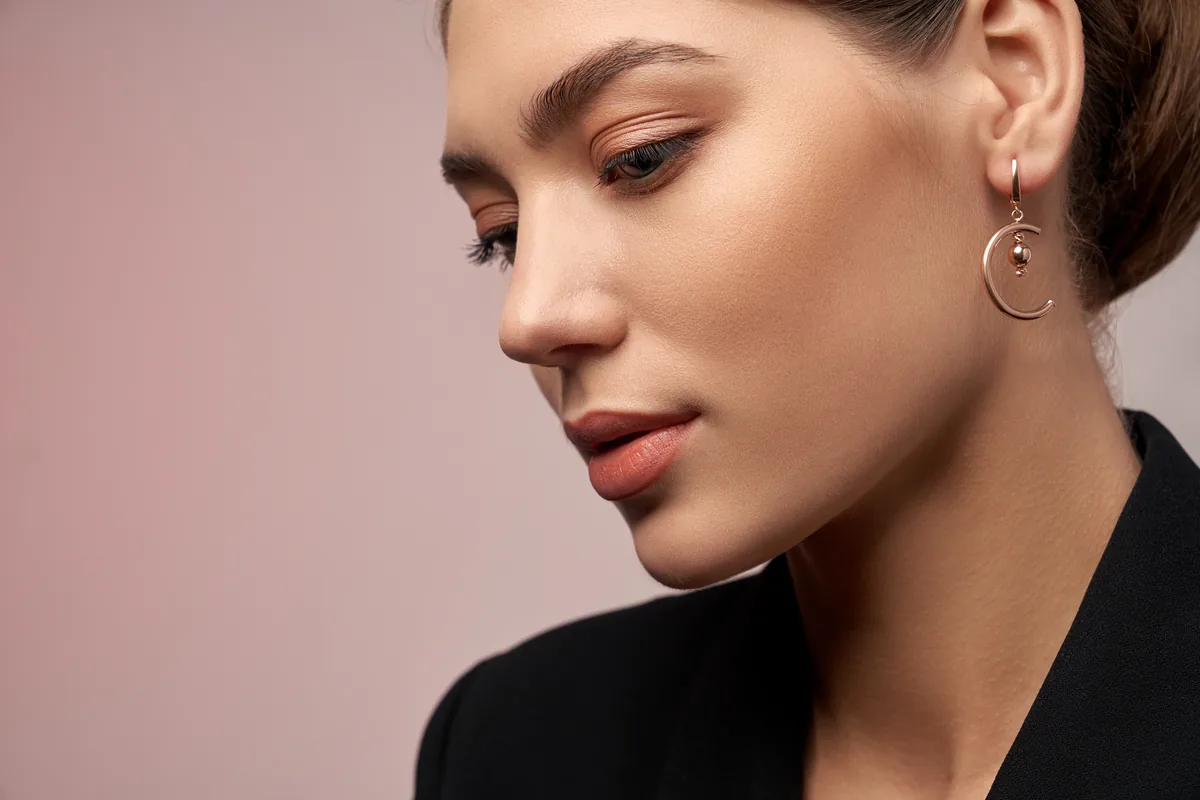
Local Filipino Jewelry Brands
One of the easiest places to find affordable and quality earrings is through local jewelry brands.
Philippine brands occupy a useful space between very inexpensive costume jewelry and traditional fine jewelry. Many offer pieces designed for everyday wear using stainless steel, sterling silver, gold vermeil, and other materials at prices that remain accessible compared with solid-gold jewelry.
You’ll also find considerably more variety than you might expect. Local collections now include minimalist studs, chunky hoops, huggies, pearls, drop earrings, ear cuffs, statement designs, and pieces intended for ear stacking.
For example, Seek Shine currently carries earrings across several material and price categories, including stainless steel pieces starting in the hundreds of pesos alongside sterling silver and gold vermeil designs.
Penny Pairs is another Philippine jewelry brand positioned around skin-safe, everyday pieces. The brand has become known for jewelry designed to balance style, comfort, and accessibility.
The advantage of shopping with established local brands isn’t simply the name on the packaging. Product pages are more likely to tell you exactly what you’re buying, which becomes important when you’re comparing two pairs that look almost identical.
Online Marketplaces
Shopee and Lazada make it possible to find earrings at almost every imaginable price. That accessibility is their biggest advantage and their biggest weakness.
Search for stainless steel hoops or 925 sterling silver studs, and you’ll encounter hundreds of listings. Some can offer excellent value. Others may use vague descriptions such as “premium alloy,” “silver color,” or “titanium steel” without giving you enough information to understand the actual composition of the jewelry.
Don’t evaluate marketplace earrings solely by the main product photo. Look at recent customer photos, particularly reviews submitted after buyers have owned the jewelry for some time.
A review posted immediately after delivery can tell you whether the item looks like the picture, but it won’t tell you how the finish behaves after repeated wear. Pay attention to comments about tarnishing, discoloration, loose clasps, bent posts, missing stones, irritation, and whether gold-colored finishes fade.
Seller history also matters. A store specializing in jewelry with thousands of completed orders gives you more information to evaluate than an unknown seller offering an enormous mixture of unrelated products.
Most importantly, check whether the seller identifies the actual material. “Gold” in a listing title doesn’t necessarily mean solid gold, just as a silver-colored earring isn’t necessarily sterling silver.
Jewelry Stores and Department Stores
Buying earrings in person still has several advantages. Department stores, jewelry counters, accessory shops, and mall-based jewelry stores let you inspect the size, finish, weight, closure, and construction before paying. This can be particularly helpful when you’re buying hoops or statement earrings because product photos don’t always communicate scale accurately.
You can also examine the clasp yourself. Open and close a hoop several times if the store allows it. A good closure should engage securely without requiring excessive force.
For studs, examine the post and backing. Very thin posts can bend easily, while poorly fitting butterfly backs can loosen over time. Flat-back and screw-back styles may be worth considering when security or comfort matters more than being able to remove the earrings quickly.
Physical stores can also be useful when you’re shopping for sterling silver or gold because you can ask staff directly about metal purity, plating, warranties, cleaning, repairs, and after-sales service. The earrings may cost slightly more than an anonymous marketplace alternative, but that premium can buy you greater confidence about what you’re actually getting.
Independent Jewelers
Traditional jewelers aren’t only for engagement rings and expensive gold jewelry. Small and independent jewelry businesses can be excellent places to look for simple studs, hoops, birthstone earrings, pearls, and lightweight gold pieces. This is particularly useful if you’d rather own a few durable pairs than continuously replace inexpensive fashion jewelry.
You may also have greater flexibility when it comes to customization. Some jewelers can change earring backs, adjust certain designs, source specific stones, or create relatively simple pieces according to your budget.
Ask about the exact metal and purity before buying. If you’re considering gold, for example, find out the karat rather than relying on a description such as “real gold.” If you’re buying sterling silver, look for a 925 marking and ask whether any additional coating or plating has been applied.
Independent jewelers can make particular sense when you’re gradually moving from costume jewelry into pieces you expect to keep for years.
Pop-Up Markets and Local Craft Fairs
Not every good jewelry brand has a permanent store. Pop-up markets, craft fairs, bazaars, weekend markets, and design events often feature independent jewelry makers and small accessory businesses. These events can be particularly good if you want earrings that feel more distinctive than mass-market designs.
Buying directly from the maker also gives you an opportunity to ask questions. Find out what metal is used for the post, hook, and body of the earring. This distinction matters because decorative components and the part that actually passes through your piercing aren’t necessarily made from the same material. Ask how the finish should be maintained and whether the earrings should be removed before showering, swimming, exercising, or applying perfume.
Handmade doesn’t automatically mean higher quality, so apply the same standards you would anywhere else. Inspect attachment points, jump rings, hooks, stone settings, and clasps before purchasing.
The Most Affordable and High-Quality Earring Materials

Stainless Steel
If affordability is your priority, stainless steel deserves serious consideration. Quality stainless steel is resistant to corrosion and requires relatively little maintenance. It’s widely used for inexpensive everyday jewelry and can be especially practical in the Philippines, where heat and humidity can make delicate jewelry finishes more challenging to maintain.
Stainless steel also allows brands to create earrings at substantially lower prices than solid precious metals. Philippine shopping guides frequently recommend it as a budget-friendly alternative for durable everyday earrings.
There’s an important distinction, however, between silver-colored stainless steel and gold-colored stainless steel. A silver stainless steel earring gets its appearance largely from the underlying metal. A gold-colored version usually requires a coating or surface treatment. That finish can eventually change depending on the plating method, wear, skin chemistry, moisture, cosmetics, and maintenance.
If maximum longevity matters more than color, plain stainless steel is often one of the safest value-oriented choices.
Sterling Silver
Sterling silver occupies a useful middle ground. Look for “925 sterling silver,” meaning the material contains 92.5% silver combined with other metals to improve strength. It gives you a genuine precious-metal piece without the considerably higher cost associated with solid gold.
Sterling silver can tarnish, so don’t assume that darkening automatically indicates poor quality. Tarnish is a surface reaction that can generally be cleaned with appropriate silver-care products.
The bigger concern is misleading labeling. Some inexpensive earrings are described using terms such as “silver,” “silver tone,” or “silver plated.” None of those descriptions necessarily means the piece is made from sterling silver.
If you’re specifically paying for sterling silver, check the product specification and look for a 925 stamp where appropriate. Buy from a seller that clearly identifies the material rather than relying exclusively on the product title.
Gold Vermeil
If you love gold jewelry but aren’t ready to pay for solid gold earrings, gold vermeil can be an attractive compromise. Vermeil generally uses sterling silver as the base metal with gold applied over the surface. That gives it an advantage over inexpensive gold-colored fashion jewelry that may use an unspecified base-metal alloy underneath.
Philippine brands offer vermeil at relatively accessible price points. For example, local jewelry retailers currently carry designs made with gold vermeil over 925 sterling silver, including everyday hoop and stud styles.
Still, don’t treat vermeil exactly like solid gold. The surface layer experiences wear. Frequent exposure to sweat, perfume, lotions, chlorine, salt water, and abrasive cleaning can affect its appearance over time.
For someone who wants the appearance of gold while keeping spending under control, however, vermeil can provide a useful balance between fashion jewelry and fine jewelry.
Things to Consider When Buying Cheap Earrings
Pay Special Attention to Materials if You Have Sensitive Ears
Affordable earrings aren’t a bargain if you can’t comfortably wear them. Nickel is a common cause of allergic contact dermatitis associated with jewelry, which is why people with sensitive ears should pay closer attention to material composition rather than trusting broad marketing terms such as “hypoallergenic.”
Titanium, platinum, appropriate grades of stainless steel, sterling silver, and higher-karat gold are commonly considered when shopping for sensitive ears, although individual reactions and alloy compositions vary.
The word “hypoallergenic” itself isn’t enough information. Look for specific material descriptions. If a product page simply says “hypoallergenic alloy” without identifying the alloy, you still don’t know very much about the earring.
People with known metal sensitivities may be better served by buying fewer pairs made from clearly identified materials rather than experimenting repeatedly with extremely cheap earrings.
Choose Your Material Based on How Often You’ll Wear the Earrings
One of the best ways to shop intelligently is to match your spending to how you’ll actually use the jewelry. If you enjoy experimenting with trends and expect to wear a dramatic pair only a few times, inexpensive fashion jewelry can make sense. There’s little reason to invest heavily in every oversized statement design that catches your attention.
Your everyday earrings deserve a different standard. Pieces worn several times a week experience much more exposure to sweat, skincare products, hair products, humidity, friction, and accidental pulling. Spending more on quality stainless steel, titanium, sterling silver, vermeil, or solid gold can become economical because those earrings receive far more use.
You can apply the same logic to your entire jewelry collection. Invest more in the styles you repeatedly reach for and spend less on experimental designs. That approach lets you enjoy affordable earrings without treating every purchase as disposable fashion.
Check the Backing and Closure Before You Buy
Materials receive most of the attention when people discuss quality earrings, but construction can determine whether you actually enjoy wearing them.
Butterfly backs are simple and familiar, although cheaper versions can gradually loosen. Screw backs provide additional security but take longer to put on and remove. Flat backs can be comfortable for certain piercings and situations because there isn’t a long post protruding behind the ear.
Hoops introduce another potential failure point: the closure. Hinged hoops and huggies should close securely and align properly. If the mechanism already feels loose when the earrings are new, regular use is unlikely to improve it.
For heavier earrings, consider how the weight is distributed across your earlobe. A beautiful pair that becomes uncomfortable after 30 minutes isn’t particularly useful if you intended to wear it throughout the day.
These small construction details are often what separate earrings you wear constantly from earrings that spend years sitting untouched in a jewelry box.
Be Skeptical of “Non-Tarnish” Claims
“Non-tarnish” has become a popular selling point for affordable jewelry, but shoppers should interpret the term carefully. Different metals and finishes behave differently. Stainless steel is highly resistant to corrosion, while sterling silver naturally develops tarnish that can usually be cleaned. Gold-plated jewelry can gradually lose its surface finish as the plating wears.
Even the same pair of earrings can perform differently from one wearer to another because jewelry is exposed to different levels of perspiration, humidity, cosmetics, chemicals, and friction. Instead of treating “non-tarnish” as an absolute guarantee, check what material creates that claimed durability.
A listing that says “316L stainless steel with PVD coating,” for example, gives you considerably more useful information than one that simply says “premium non-tarnish earrings.” Specific material information is usually a better sign than extravagant durability claims.
Compare Cost Per Wear Instead of Price Alone
Cost per wear is a useful way to decide whether earrings are genuinely affordable.
Suppose you buy trendy earrings for ₱150 and wear them three times before the finish becomes unattractive. That’s ₱50 per wear. Now suppose you buy a better-made pair for ₱900 and wear it twice a week for two years. Even without accounting for resale value, the cost per wear becomes dramatically lower.
This doesn’t mean expensive earrings automatically offer better value. A ₱2,000 pair that remains untouched in your jewelry box is still a poor purchase.
Think about your existing wardrobe, lifestyle, and habits. Small hoops, huggies, simple studs, pearls, and minimalist drops tend to work across more outfits and occasions than highly specific statement designs. For staple jewelry, versatility is part of quality because it increases how often you’ll actually use what you’ve purchased.
How to Make Affordable Earrings Last Longer
Even quality earrings deteriorate faster when they’re constantly exposed to moisture and chemicals.
Perfume, hairspray, sunscreen, lotion, makeup, sweat, chlorine, and salt water can all affect jewelry surfaces. Apply beauty products before putting on your earrings whenever possible and give them time to dry.
After wearing your earrings, gently wipe them before storage. Keep pairs separated so harder pieces don’t repeatedly scratch softer surfaces.
Storage is especially important for sterling silver and plated jewelry. Leaving earrings scattered on a humid bathroom counter creates very different conditions from storing clean, dry pieces properly.
Follow the seller’s care instructions because different materials require different treatment. A cleaning method appropriate for solid stainless steel may be unnecessarily abrasive for a delicate plated finish.
Taking care of inexpensive jewelry won’t magically change the underlying material, but proper maintenance can substantially improve how much use you get from a good pair.
Where Should You Buy Affordable and Quality Earrings?
The best place depends on what you’re trying to buy.
Online marketplaces offer the greatest variety and some of the lowest prices, making them useful for stainless steel basics and trend-driven styles. Local Philippine jewelry brands are worth considering when you want better material transparency, more distinctive designs, and accessible sterling silver or vermeil options.
Department stores and physical jewelry shops give you the advantage of inspecting the earrings before purchasing. Independent jewelers make more sense when you’re ready to invest in sterling silver, gold, gemstones, or pieces intended to last for years. Pop-ups and craft markets can fill the gap when you want something more individual.
There’s no single store that will always provide the best value. Learning how to evaluate earrings means you don’t have to depend entirely on a brand name or price tag. Check the metal, coating, post, backing, clasp, construction, reviews, care requirements, and return policy.
Finding Better Earrings Without Overspending
Knowing where to find affordable and quality earrings becomes much easier once you stop using price as your main measure of value.
Start with established local jewelry brands, reputable marketplace sellers, department stores, craft markets, and independent jewelers. Then compare the materials and construction rather than assuming the cheapest or most expensive pair must be the better choice.
Stainless steel can be excellent for budget-friendly everyday wear, while sterling silver and gold vermeil provide accessible upgrades when you want precious metals or a more premium finish. Solid gold and other fine-jewelry materials may make more sense for pieces you expect to wear for many years.
The goal isn’t to spend as little as possible. It’s to buy earrings you’ll genuinely wear, that suit your skin and lifestyle, and that stay in your collection long enough to make the price worthwhile.