Table of Contents

Keloids are raised scars that continue growing beyond the boundaries of the original skin injury. They can develop after acne, piercings, cuts, burns, surgery, vaccinations, or even relatively minor skin trauma. Some remain small, while others gradually become thick, firm, itchy, tender, or noticeably larger.
Because keloids involve excessive scar tissue formation, they usually don’t respond well to ordinary scar creams alone. Effective keloid scar treatment often focuses on flattening the scar, reducing symptoms, improving its appearance, and controlling the biological processes that can cause it to grow again.
There isn’t one treatment that works equally well for every keloid. Dermatologists often combine treatments and adjust the approach according to the scar’s size, thickness, location, age, symptoms, and response to previous treatment.
What Is a Keloid?
A keloid is a type of abnormal scar caused by an exaggerated healing response. When skin is injured, the body produces collagen and other components of the extracellular matrix to repair the damaged tissue. Normally, this process gradually slows once the wound has healed.
With a keloid, scar-forming activity continues longer than necessary. Fibroblasts, the cells involved in producing collagen and supporting wound repair, remain unusually active. The resulting scar can become raised and extend into previously uninjured skin.
Keloids may appear shiny, smooth, firm, or rubbery. Their color can range from pink and red to brown or darker than the surrounding skin, depending partly on skin tone and how active the scar is.
They can also cause more than a cosmetic concern. Some people experience itching, burning, tenderness, or pain. Large keloids near joints or areas that move frequently may cause tightness or interfere with comfortable movement.
Keloid vs. Hypertrophic Scar: What’s the Difference?
Distinguishing a keloid from a hypertrophic scar matters because their behavior and treatment can differ.
A hypertrophic scar becomes thick and raised but generally remains within the boundaries of the original injury. It may also flatten gradually over time.
A keloid grows beyond the original wound. Instead of remaining confined to an incision, piercing, or acne lesion, scar tissue can progressively spread into surrounding skin. Keloids are also more likely to persist and recur after treatment.
If you’re unsure which type of scar you have, a dermatologist can evaluate its appearance, history, growth pattern, and symptoms. This is especially useful before considering procedures because not every raised skin lesion is necessarily a keloid.
What Causes Keloids?
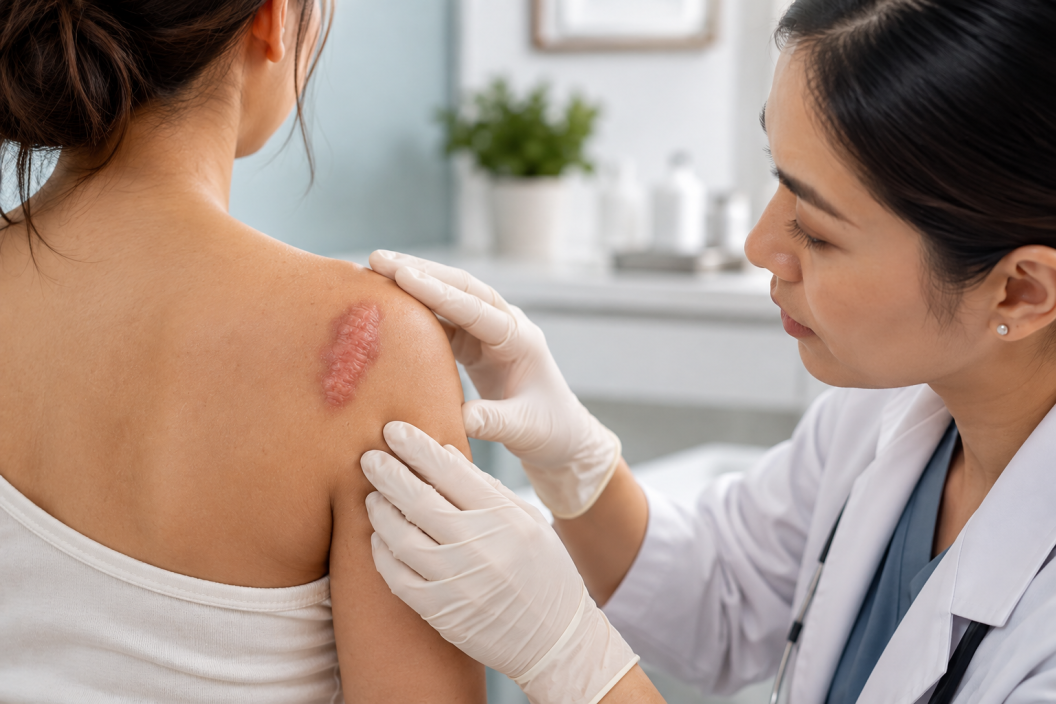
Keloids can develop after almost any injury that disrupts the skin. Common triggers include acne, ear and body piercings, surgical incisions, cuts, burns, scratches, insect bites, tattoos, and injections.
Genetics also plays an important role. Some people are simply more prone to excessive scar formation than others. Having developed one keloid can indicate a greater likelihood of developing another after future skin injuries.
Skin tone is another recognized factor. Keloids occur more frequently in people with darker skin pigmentation, including many Asian populations. However, anyone can develop them.
Certain parts of the body are particularly susceptible. The chest, shoulders, upper back, jawline, neck, and earlobes are common locations. Areas exposed to repeated tension or movement can also be challenging because mechanical stress may contribute to persistent scar activity.

Can Keloids Go Away on Their Own?
Keloids generally don’t disappear completely without treatment. Some may stop growing or become less noticeable with time, but spontaneous flattening is less predictable than it is with ordinary or hypertrophic scars.
That doesn’t mean every keloid needs aggressive treatment. A small, stable scar that isn’t causing discomfort may simply be monitored. Treatment becomes more relevant when a keloid continues growing, causes itching or pain, restricts movement, or creates a significant cosmetic concern.
Early assessment can also be helpful when a scar is actively becoming thicker or expanding. Smaller or newer keloids may be easier to manage than large, long-established lesions.
Keloid Scar Treatment Options
The main challenge with keloid scar treatment isn’t simply removing excess scar tissue. It’s preventing the biological response that created the keloid from producing another one.
For that reason, combination therapy is common. A dermatologist may use one treatment to flatten or remove the existing scar and another to reduce inflammation, collagen production, or recurrence.
Corticosteroid Injections
Intralesional corticosteroid injections are among the most established treatments for keloids. Instead of applying medication to the surface, a clinician injects it directly into the scar.
Triamcinolone is commonly used. Corticosteroids can reduce inflammation and suppress excessive collagen activity, gradually making the keloid softer and flatter. They may also help relieve itching or tenderness.
Treatment usually requires multiple sessions rather than a single injection. Sessions are spaced apart to give the tissue time to respond.
Possible side effects include thinning of the skin, changes in pigmentation, and visible small blood vessels. The concentration, injection technique, treatment interval, and characteristics of the scar therefore matter.
Silicone Gel and Silicone Sheets
Silicone is a noninvasive option commonly used for raised scars. It comes in gels and reusable or disposable sheets that cover the scar for extended periods.
Silicone therapy helps maintain an appropriate level of hydration at the scar surface and may influence the signals involved in excessive scar formation. Consistent use over several months may help soften and flatten some scars.
It tends to require patience. Applying silicone occasionally is unlikely to produce the same results as consistent use according to a dermatologist’s or product manufacturer’s instructions.
Silicone can also play a role after procedures when preventing another raised scar is a concern.
Cryotherapy
Cryotherapy uses very low temperatures, commonly through liquid nitrogen, to freeze keloid tissue. The controlled injury damages scar tissue and can gradually reduce its volume.
This technique may work particularly well for smaller keloids. Several sessions can be necessary, and clinicians sometimes combine cryotherapy with corticosteroid injections.
Changes in skin pigmentation are an important consideration, especially for people with darker skin. Hypopigmentation, or an area becoming lighter than the surrounding skin, can occur after freezing.
Laser Treatment
Laser treatment can target different characteristics of a keloid depending on the device being used. Certain vascular lasers target blood vessels within active scars and can help address redness, while other laser techniques may be used to improve thickness or texture.
Laser therapy isn’t necessarily a stand-alone cure. Dermatologists may combine it with steroid injections or other treatments because treating the visible scar doesn’t always eliminate its tendency to recur.
The choice of laser also matters for Filipino patients and others with more heavily pigmented skin. Laser settings need to account for melanin to reduce the risk of burns and post-inflammatory hyperpigmentation or hypopigmentation.
Keloid Surgery
Surgical excision physically removes the keloid and may seem like the most direct solution, particularly for a large scar. The difficulty is that surgery creates another wound.
Removing a keloid without additional therapy can therefore result in recurrence, sometimes with another substantial scar. Surgery is generally more useful when incorporated into a broader treatment plan.
A dermatologist or surgeon may combine excision with postoperative steroid injections, silicone therapy, pressure treatment, or another recurrence-prevention strategy. The exact combination depends on the keloid’s location and individual risk factors.
Pressure Therapy
Pressure therapy is especially relevant for certain keloids, including those on the earlobes after piercing or surgical removal.
Specialized pressure earrings or compression devices continuously apply controlled pressure to the affected area. Over time, this can help suppress excessive scar growth and reduce recurrence.
The drawback is that pressure therapy requires consistency. Devices may need to be worn for many hours each day over an extended period, so comfort and proper fit can significantly affect adherence.
Other Injectable Treatments
Some stubborn keloids don’t respond sufficiently to corticosteroids alone. In these cases, dermatologists may consider other intralesional medications or combination injections.
One example is 5-fluorouracil, or 5-FU, which can inhibit rapidly proliferating fibroblasts involved in excessive scar formation. It may be used alone in selected circumstances or combined with corticosteroids.
Other treatments have also been investigated for difficult or recurrent keloids. Their suitability depends on the patient’s medical history, scar characteristics, available evidence, and clinician’s experience.
Why Combination Treatment Is Often More Effective
Keloids are difficult to treat because several processes contribute to their formation. Simply reducing the physical size of the scar doesn’t necessarily stop the cellular activity responsible for excessive collagen production.
Combination therapy targets the problem from multiple directions.
For example, cryotherapy may reduce the volume of a smaller keloid, while corticosteroid injections suppress scar activity. Surgery can remove a larger lesion, while postoperative therapy attempts to prevent the new incision from developing into another keloid.
This also explains why treatment plans may change over time. A dermatologist can evaluate whether a scar is becoming softer, flatter, less symptomatic, or less vascular and adjust treatment accordingly.
How Long Does Keloid Treatment Take?
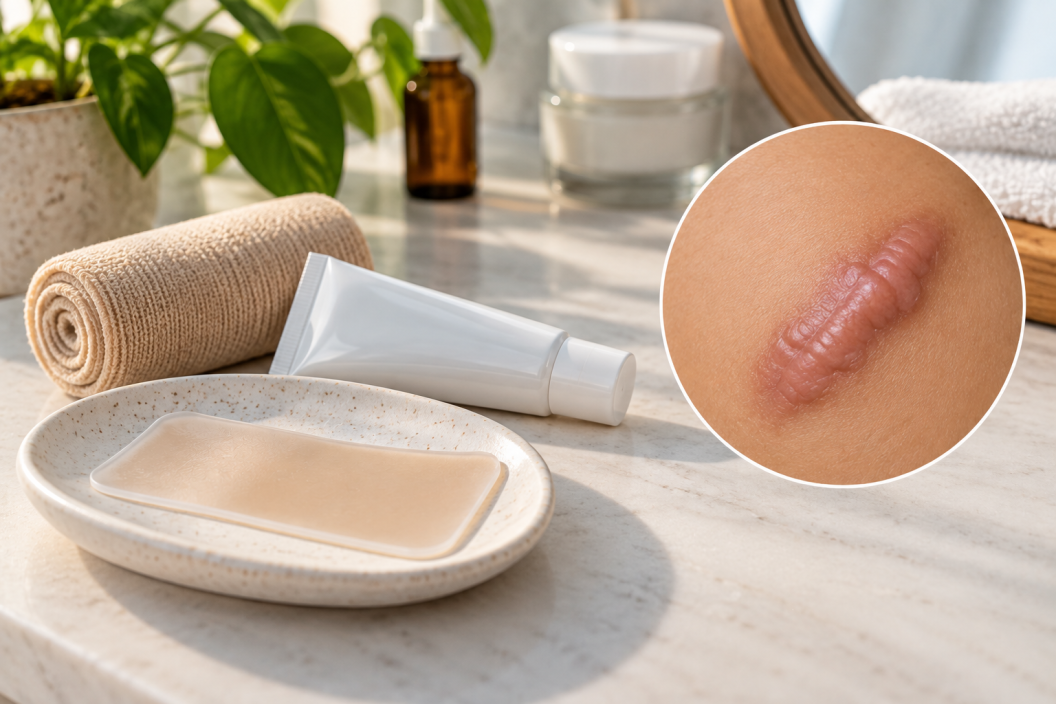
Keloid treatment is usually measured in months rather than days.
Injection treatments commonly require multiple appointments. Silicone products need consistent use over an extended period. Laser therapy may involve a series of sessions, while surgical treatment can require follow-up care designed specifically to reduce recurrence.
The visible response can also be gradual. A keloid may become softer or less itchy before there is a dramatic change in height.
Patients should therefore discuss realistic treatment goals before starting. Complete disappearance isn’t always possible. A meaningful result may instead involve flattening the scar, relieving pain or itching, reducing discoloration, and making the keloid substantially less noticeable.
Can Keloid Creams Remove Keloids?
Over-the-counter products are frequently marketed as scar removers, but established keloids are biologically different from ordinary flat scars.
A topical product has to penetrate sufficiently and affect the excessive scar tissue responsible for the raised lesion. Many cosmetic scar creams don’t have strong evidence showing that they can eliminate established keloids.
Silicone gel is different because silicone therapy has an established role in scar management. Even then, results vary, particularly with large, thick, or mature keloids.
People considering expensive scar products should be cautious about claims promising complete removal. A growing, painful, or prominent keloid generally warrants professional assessment rather than relying exclusively on cosmetic creams.
Should You Massage a Keloid?
Scar massage is sometimes recommended during recovery from ordinary wounds, but it shouldn’t automatically be assumed to treat an established keloid.
Aggressive manipulation can irritate sensitive scar tissue. If a scar is painful, inflamed, actively growing, or located over a recently healed wound, ask your dermatologist or surgeon before beginning massage.
Recommendations can differ depending on the stage of healing and the type of scar. What helps a routine surgical scar isn’t necessarily appropriate for someone prone to keloid formation.
Can You Prevent Keloids?
Prevention is particularly valuable for people who already know they’re prone to keloids.
Avoiding unnecessary skin trauma can lower the number of opportunities for a keloid to develop. Elective piercings, tattoos, and cosmetic procedures deserve extra consideration if previous wounds have produced significant raised scars.
Necessary surgery presents a different situation. Tell your surgeon about your history of keloids before the procedure. This allows the medical team to consider incision placement, wound tension, postoperative monitoring, and preventive scar treatment when appropriate.
Proper wound care also matters. Keeping healing wounds clean, following postoperative instructions, avoiding unnecessary irritation, and protecting scars from excessive sun exposure can support more predictable healing.
When Should You See a Dermatologist?
Consider having a raised scar evaluated if it continues expanding beyond the original wound, becomes painful or persistently itchy, changes noticeably, restricts movement, or causes significant concern.
Professional assessment is particularly valuable before attempting aggressive home treatments. Cutting, burning, freezing, or otherwise trying to remove a keloid yourself can create additional skin trauma and potentially worsen scarring, infection, or pigmentation problems.
A dermatologist can also confirm whether the lesion is actually a keloid. If its appearance or behavior is unusual, further evaluation may be needed before treatment.
Choosing a Keloid Scar Treatment in the Philippines
When seeking treatment in the Philippines, look for a board-certified dermatologist or another appropriately qualified physician experienced in scar management. This becomes particularly important for procedures such as injections, lasers, cryotherapy, and surgical treatment.
Ask what the treatment is expected to improve and whether it targets thickness, redness, symptoms, recurrence, or several of these concerns. You should also understand how many sessions may be needed, what downtime is expected, and which side effects are particularly relevant to your skin tone.
For surgical treatment, ask specifically about recurrence prevention. Removing the visible scar is only one part of managing a keloid.
Cost also varies considerably depending on the size and number of scars, treatment method, number of sessions, clinic, and whether several therapies are combined. A consultation provides a more meaningful estimate than comparing per-session prices without knowing the recommended treatment plan.
What Results Can You Realistically Expect?
Keloids are persistent scars, so treatment is usually about control and improvement rather than guaranteeing permanent removal.
A successful outcome may mean a scar becomes substantially flatter, softer, less painful, less itchy, or less conspicuous. Some people respond well to a relatively straightforward treatment, while recurrent or extensive keloids may need several approaches over a longer period.
Recurrence remains possible even after an initially successful result. Follow-up appointments therefore matter, especially after surgery or when a previously stable scar begins thickening again.
The most appropriate keloid scar treatment depends on the scar itself and the person who has it. Corticosteroid injections, silicone therapy, cryotherapy, laser procedures, pressure treatment, surgery, and combination approaches all have potential roles. A dermatologist can determine which options offer the best balance between scar improvement, side effects, treatment burden, and recurrence prevention for your specific case.