Table of Contents

Choosing braces used to be fairly simple. For most people, it meant one thing: metal braces. Now, that decision is far more nuanced. Filipino patients are no longer just asking whether they need braces. They are asking which type of braces actually fits their budget, lifestyle, confidence level, and long-term treatment goals.
That is exactly why the comparison between traditional metal braces, ceramic braces, and lingual braces matters so much. All three can straighten teeth and help correct bite issues, but they do not feel the same, look the same, or cost the same.
So which one is actually best? The honest answer is that there is no universal winner. The best braces for you depend on what matters most: affordability, aesthetics, comfort, ease of cleaning, or the ability to treat a more complex orthodontic case. This guide breaks that down clearly so you can make a smarter decision before committing to treatment.
Why This Braces Comparison Matters
A lot of braces content online oversimplifies the choice. It usually tells you that metal braces are visible, ceramic braces are tooth-colored, and lingual braces are hidden. That is true, but it is not enough to help someone spend tens of thousands of pesos wisely.
A real braces decision in the Philippines usually involves practical questions:
- How visible will they be in photos and meetings?
- Will they fit your monthly budget?
- Are they easy to clean if you already have a busy schedule?
- Will they affect your speech?
- Are they suitable for mild alignment issues only, or can they also help with crowding and bite correction?
Those concerns are exactly why comparison content performs well for orthodontic searches: people are trying to narrow down a treatment option, not just learn definitions. This matters even more for adults. The APO states that 1 in 5 orthodontic patients is an adult, which means the modern braces audience is not just parents booking treatment for children. It includes working professionals, public-facing employees, and adults who delayed treatment and now want a more polished or discreet option.
What Traditional Metal Braces Are
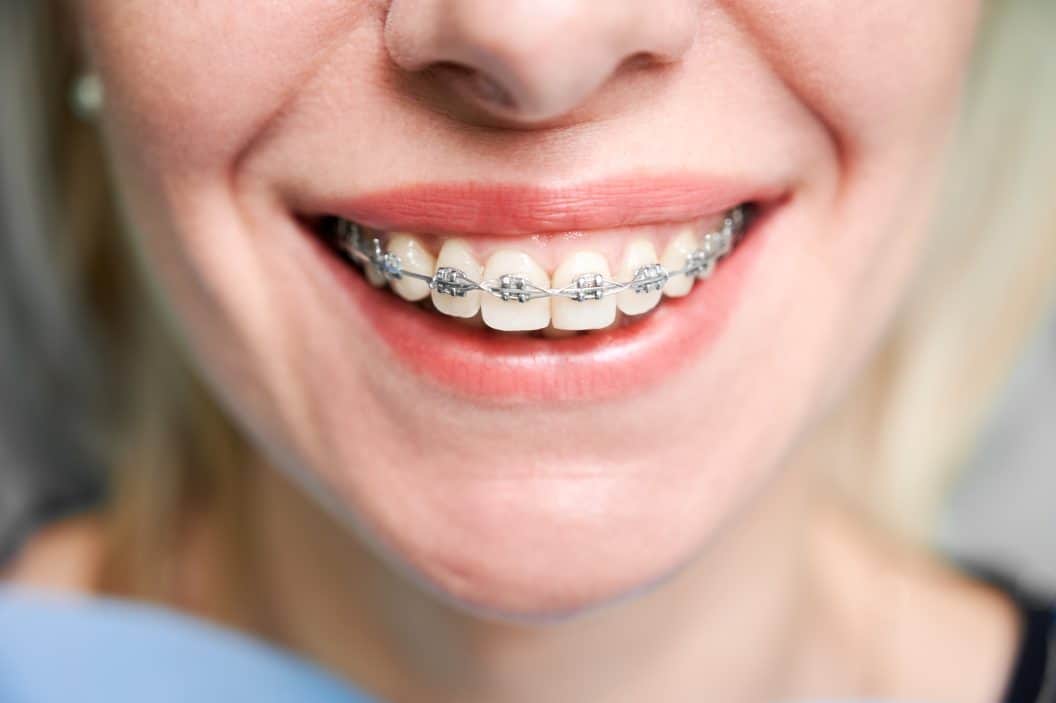
Traditional metal braces are the braces most people picture first. They use stainless steel brackets bonded to the front of the teeth, connected by an archwire that applies steady pressure over time. Cleveland Clinic notes that this mild, continuous pressure gradually shifts teeth into better alignment.
Their biggest advantage is straightforward: reliability. Metal braces are widely used because they are durable, effective, and generally suitable for a broad range of cases, from simple crowding to more involved bite corrections. Philippine clinic pages also consistently position them as the most affordable braces type. Reported local price ranges vary by clinic and complexity, but published estimates commonly place traditional metal braces somewhere around ₱30,000 to ₱100,000, with many sources clustering the more typical range lower than premium alternatives.
That affordability is a major reason metal braces remain the default recommendation for many patients in the Philippines. They are also less fragile than ceramic brackets, which matters if you want something that can better tolerate daily wear and minor mishaps.
The obvious downside is visibility. They are the most noticeable option of the three, and for some adults, that alone is enough to look elsewhere. Still, if your priority is value, treatment versatility, and proven performance, traditional braces are often hard to beat.
What Ceramic Braces Are
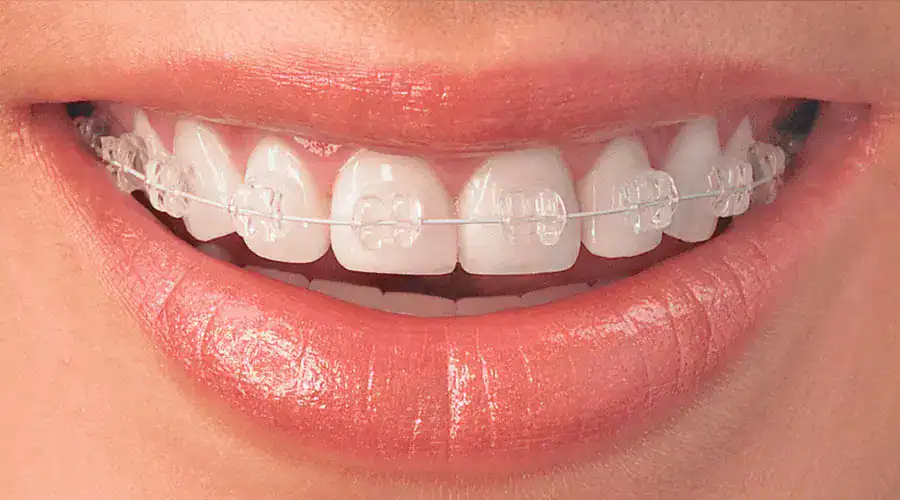
Ceramic braces work in much the same way as traditional braces, but the brackets are made from tooth-colored or clear ceramic material instead of shiny metal. Cleveland Clinic explains that the brackets, wires, and ligatures are designed to blend in more with your smile, which is why ceramic braces are usually described as less noticeable rather than invisible.
This is the key appeal. Ceramic braces are for patients who still want the control and fixed-appliance benefits of conventional braces, but with a softer, more discreet appearance. That makes them particularly attractive to adults, university students, and professionals who feel self-conscious about a very obvious metal look. Philippine clinic sources repeatedly position ceramic braces as the aesthetic middle ground: more subtle than metal, but not as concealed as lingual braces or clear aligners.
The trade-off is maintenance. Ceramic braces can be more fragile than metal braces, and some components can stain over time if oral hygiene slips or if you frequently consume staining foods and drinks. That does not mean they are a poor choice. It simply means they reward patients who are consistent about cleaning and follow-up care.
Cost is another consideration. Published Philippine ranges for ceramic braces commonly sit above metal braces, often around ₱50,000 to ₱140,000 depending on clinic, location, and case complexity.
What Lingual Braces Are
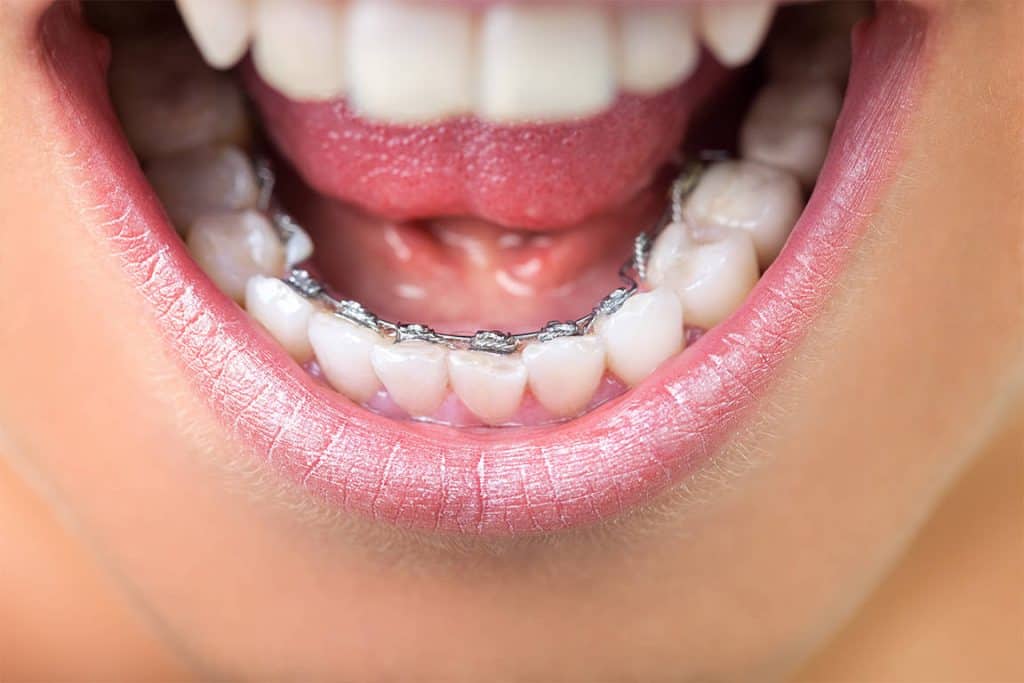
Lingual braces are fixed braces too, but instead of being attached to the front of the teeth, they are placed on the back or lingual surface. That is what makes them so appealing: from the front, they are extremely difficult to see. Cleveland Clinic and Philippine dental sources describe them as virtually invisible when you smile.
For image-conscious adults, that sounds like the perfect answer. In some ways, it is. If you need a fixed orthodontic appliance but do not want visible brackets on the front of your teeth, lingual braces can be an excellent option.
But lingual braces come with a steeper learning curve. Because they sit behind the teeth, patients may find them harder to clean. Some also notice temporary speech changes or tongue irritation early in treatment. Local Philippine clinic pages specifically mention more cleaning difficulty and higher treatment complexity, which helps explain why lingual braces are priced at the premium end.
In the Philippines, published lingual braces commonly start around ₱80,000 and can reach ₱200,000 depending on the provider and case. So while lingual braces may look like the most elegant option on paper, they are not automatically the best choice for everyone. They suit patients who strongly prioritize invisibility and are prepared for the cost and adjustment period that come with it.
Traditional vs Ceramic vs Lingual Braces: The Key Differences
The most useful way to compare these braces is not by asking which is “best” in general, but by asking which one wins in the category that matters most to you.
Appearance and Visibility
If visibility is your top concern, lingual braces are the clear winner because they sit behind the teeth and are largely hidden from view. Ceramic braces come next because they blend in with your natural tooth color, but they are still visible at a conversational distance. Traditional metal braces are the most noticeable.
This distinction matters because many people casually lump ceramic braces into the “invisible braces” category. That is not quite accurate. Ceramic braces are more discreet, not invisible.
Cost in the Philippines
Traditional metal braces are usually the most budget-friendly option. Ceramic braces are typically more expensive because of the materials and aesthetic advantage. Lingual braces are usually the most expensive because they require more specialized placement and management. Across Philippine clinic sources, metal braces commonly appear around ₱30,000 to ₱80,000 or slightly higher, ceramic around ₱50,000 to ₱140,000, and lingual around ₱80,000 to ₱200,000.
Comfort and Adjustment
All braces can cause discomfort after adjustments because that is how tooth movement happens. The APO notes that discomfort typically follows adjustments but tends to lessen as treatment progresses.
That said, lingual braces may feel more intrusive at the start because they sit against the tongue side of the teeth. Ceramic and metal braces are usually easier for patients to adapt to in everyday speech and eating, though personal experience varies.
Cleaning and Maintenance
Metal braces are generally the easiest of the three to live with from a durability standpoint. Ceramic braces need a bit more care because the brackets can be more fragile, and the aesthetic components can stain. Lingual braces can be the most challenging to clean because of their placement on the back of the teeth.
Durability
Traditional metal braces are the most durable. Ceramic braces are effective, but the brackets are more likely to chip or break than metal. Lingual braces are not necessarily “weak,” but they are more technique-sensitive and can feel more complicated from a patient-experience perspective.
Effectiveness and Suitability
This is where patients sometimes get misled by aesthetics. The braces that look best are not always the braces that are best for your case.
The APO says metal and ceramic braces deliver almost the same efficiency and capability to move teeth. In other words, ceramic braces are not a compromise in effectiveness just because they look nicer. Lingual braces can also treat many orthodontic cases, but whether they are ideal depends on the details of your bite, spacing, and alignment needs.
That is why the real question is not “Which braces are the fanciest?” but “Which braces can handle my case well without forcing me into a trade-off I will regret six months from now?”
Which Braces Type is Best for Teens, Adults, and Working Professionals?
For teens, traditional metal braces still make a lot of sense. They are affordable, durable, and appropriate for a wide range of cases. They are also the easiest for many families to budget for over time.
For adults, ceramic braces are often a strong middle-ground option. They offer the fixed-treatment benefits of conventional braces while looking less obvious in day-to-day interactions. This makes them attractive to adults who want something discreet but not ultra-premium.
For working professionals or public-facing individuals, lingual braces can be appealing if appearance matters above almost everything else. If you are constantly in meetings, creating content, speaking on camera, or interacting with clients, the hidden placement can be a major plus. But that benefit only makes sense if you are comfortable with the higher price and the likelihood of a tougher adjustment phase.

How Much Do Traditional, Ceramic, and Lingual Braces Cost in the Philippines?
The most realistic way to discuss braces cost in the Philippines is as a range, not a single price. Clinics vary in location, orthodontist experience, case complexity, and what is included in the package.
Based on published Philippine clinic estimates, traditional metal braces commonly range from around ₱30,000 to ₱100,000. Ceramic braces usually start higher, often around ₱50,000 to ₱140,000. Lingual braces typically sit at the premium end, roughly ₱80,000 to ₱200,000.
That range alone does not tell the full story, though. Before choosing a provider, ask what the fee includes. Does it cover diagnostics, installation, monthly adjustments, retainers, emergency visits, and replacement of broken parts? A lower headline price can stop looking affordable very quickly if the inclusions are limited.
Questions to Ask Your Orthodontist Before Choosing
Before you say yes to any braces type, ask a few practical questions. Ask:
- Whether your case can be treated equally well with all three options, or whether one appliance is clearly better for your bite.
- How visible each option will look in real life, not just in a brochure.
- About maintenance, speech changes, breakage risk, adjustment frequency, and what happens if a bracket comes off.
Most importantly, make sure you are dealing with a properly trained orthodontist. Braces are not just a cosmetic purchase. They are a long-term medical-dental treatment that affects tooth movement, bite function, gum health, and stability.
Final Verdict: Which Braces Option Gives the Best Value?
If you want the best all-around value, traditional metal braces are usually the strongest choice. They are the most affordable, the most durable, and suitable for many orthodontic cases. For a lot of patients in the Philippines, they offer the best balance of effectiveness and cost.
If you want a more polished look without jumping to the highest price tier, ceramic braces are often the smart compromise. They give you a more discreet appearance while maintaining much of the same treatment capability as metal braces. The catch is that you have to be a little more careful with cleaning and maintenance.
If you care most about keeping your braces hidden, lingual braces stand out. But they only deliver strong value if invisibility is genuinely important to you. Otherwise, the higher cost and more demanding adjustment period may not feel justified.
In other words, the best braces are not the most expensive or the least visible. They are the ones that match your orthodontic needs, your tolerance for maintenance, and your real budget.
Frequently Asked Questions
Are ceramic braces faster than traditional braces?
Not necessarily. The APO states that metal and ceramic braces have almost the same efficiency and capability to move teeth. Treatment length depends more on your case complexity and treatment plan than bracket color. Average orthodontic treatment is around two years, though more difficult cases can take longer.
Are lingual braces more painful?
They are not always more painful, but they can be harder to adjust to at first because they sit behind the teeth. Some patients notice tongue irritation or temporary speech changes early in treatment.
Do ceramic braces stain?
The brackets themselves are designed to blend in, but ceramic systems can be more prone to visible staining in some components and generally require better maintenance than metal braces.
Which type of braces is cheapest in the Philippines?
Traditional metal braces are generally the most affordable option in published Philippine pricing guides.
Can adults still get braces?
Yes. The Association of Philippine Orthodontists says braces are not just for kids and notes that 1 in 5 orthodontic patients is an adult. There is no age limit for orthodontic treatment as long as the teeth, gums, and supporting bone are healthy.
How long do braces usually take?
The APO says average orthodontic treatment is around two years, while some Philippine clinic pages commonly list treatment windows in the 18 to 24 month range for standard braces cases. More difficult cases can take longer.