Table of Contents


Our skin often reflects what’s going on inside our bodies, especially in the gut. The gut-skin connection is gaining increasing attention in dermatology and nutrition, with growing evidence pointing to the relationship between gut health and skin conditions.
Understanding how gut health influences skin can empower individuals to treat persistent skin issues from the inside out, rather than relying solely on topical treatments.
The Gut-Skin Axis Explained
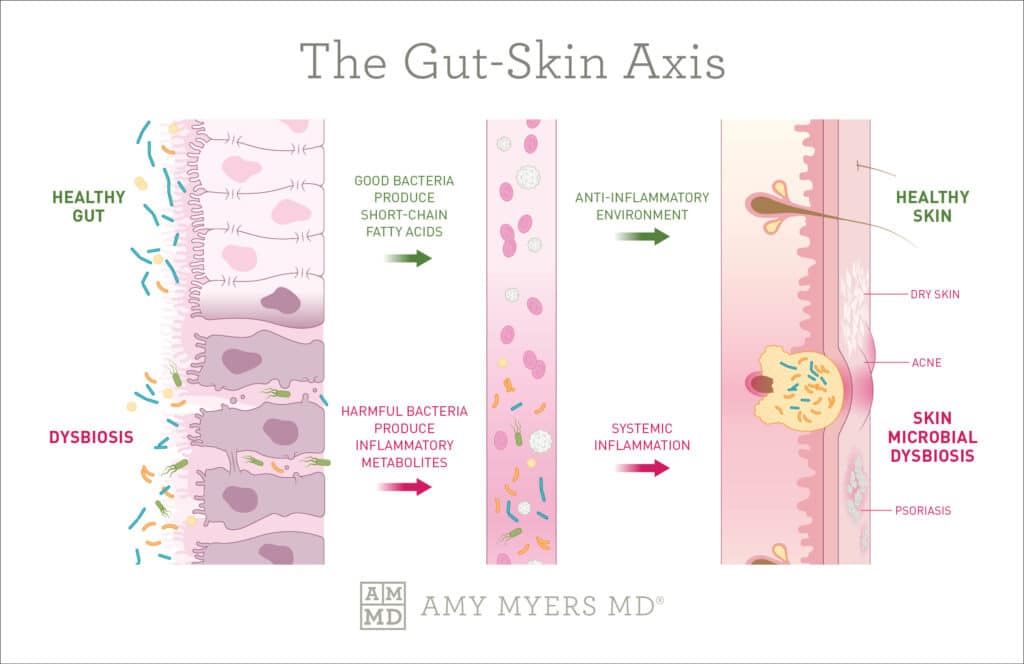
The gut-skin axis refers to the two-way communication system between your gastrointestinal tract and your skin. This connection is regulated through immune responses, hormones, and microbial interactions.
When your gut microbiome, composed of trillions of bacteria, fungi, and viruses, is in balance, it helps maintain healthy skin by reducing inflammation and supporting nutrient absorption.
Conversely, an imbalanced gut (dysbiosis) can lead to systemic inflammation that may manifest as acne, eczema, rosacea, or psoriasis.
Inflammation: The Bridge Between Gut Health and Skin
Chronic inflammation is a key mechanism that links gut health to skin conditions. When the gut barrier is compromised, substances like lipopolysaccharides (LPS) enter the bloodstream and activate inflammatory pathways.
This systemic inflammation can worsen existing skin conditions or trigger new ones. By supporting the gut lining and reducing inflammatory triggers through diet and lifestyle, you can often reduce the severity and frequency of flare-ups.
Diet’s Role in Healing the Gut-Skin Axis
What you eat directly influences your gut microbiome, and by extension, your skin health. Diets rich in fiber, fermented foods, and antioxidants help nourish good bacteria and reduce gut inflammation.
On the other hand, processed foods, refined sugars, and excessive dairy can disrupt microbial balance and increase inflammation and cause premature aging. Many people have reported clearer skin after adopting gut-friendly diets like the Mediterranean diet or anti-inflammatory eating patterns.
Common Skin Conditions Linked to Gut Health
Acne: Gut Dysbiosis and Inflammation
Acne is closely associated with gut dysbiosis, where an imbalance in gut bacteria leads to increased intestinal permeability, often referred to as “leaky gut.” This condition allows toxins and inflammatory agents to enter the bloodstream, triggering systemic inflammation that can manifest as acne.
Studies have shown that individuals with acne often exhibit altered gut microbiota, with a decrease in beneficial bacteria like Lactobacillus and Bifidobacterium species.
Additionally, the gut-brain-skin axis suggests that psychological stress can exacerbate gut dysbiosis, further contributing to acne development.
Eczema: Immune Dysregulation from the Gut
Eczema has been linked to gut microbiome imbalances that affect the body’s immune responses. A disrupted gut barrier can lead to increased systemic inflammation, which may exacerbate skin inflammation characteristic of eczema.
Research indicates that individuals with eczema often have reduced diversity in their gut microbiota, particularly a decrease in Bifidobacterium species, which play a role in maintaining immune homeostasis. Probiotic supplementation has shown promise in restoring gut balance and alleviating eczema symptoms.
Psoriasis: Gut-Driven Autoimmune Responses
Psoriasis is an autoimmune condition where the immune system attacks healthy skin cells, leading to rapid skin cell turnover and inflammation. Emerging evidence suggests that gut microbiota imbalances can influence systemic immune responses, potentially triggering or exacerbating psoriasis.
Studies have found that individuals with psoriasis often exhibit reduced levels of beneficial gut bacteria and increased intestinal permeability, allowing inflammatory compounds to enter the bloodstream and affect the skin. Addressing gut health through diet and probiotics may help modulate immune responses and improve psoriasis symptoms.
Rosacea: The Role of Gut Microbiota and SIBO
Rosacea, characterized by facial redness and inflammation, has been associated with gastrointestinal disorders, particularly Small Intestinal Bacterial Overgrowth (SIBO). SIBO occurs when excessive bacteria grow in the small intestine, leading to increased intestinal permeability and systemic inflammation.
Research indicates that treating SIBO can lead to significant improvements in rosacea symptoms, highlighting the gut-skin connection. Additionally, individuals with rosacea often exhibit distinct gut microbiota profiles, suggesting that gut health plays a role in the condition’s pathogenesis.
Atopic Dermatitis: Gut Microbiome and Skin Barrier Function
Atopic dermatitis is a chronic inflammatory skin condition marked by itchy and inflamed skin. The gut microbiome influences skin barrier function and immune responses, both critical in atopic dermatitis. Dysbiosis in the gut can lead to increased production of inflammatory cytokines, exacerbating skin inflammation.
Probiotic interventions have been explored as a means to restore gut microbial balance and improve skin barrier integrity, showing potential in managing atopic dermatitis symptoms.
Alopecia Areata: Autoimmunity and Gut Health
Alopecia areata is an autoimmune disorder resulting in hair loss, where the immune system attacks hair follicles. Recent studies suggest a link between gut microbiota composition and autoimmune conditions, including alopecia areata.
Alterations in gut bacteria may influence immune system regulation, potentially triggering autoimmune responses that affect hair follicles. While research is ongoing, maintaining a healthy gut microbiome through diet and probiotics may offer a complementary approach to managing alopecia areata.
When to Seek Medical Advice
While improving gut health can significantly benefit skin, persistent or severe conditions still require medical attention. If dietary changes and probiotics don’t produce results, or if symptoms worsen, it’s essential to consult a dermatologist and possibly a gastroenterologist.
Testing for food sensitivities, gut infections, or underlying conditions like IBS or SIBO may be necessary to develop a targeted treatment plan.

A Holistic Approach to Clearer Skin
Addressing gut health is not a magic bullet, but it’s a foundational strategy for improving skin naturally and sustainably. Combining a balanced diet, stress management, hydration, and appropriate skincare can lead to long-term improvements.
By treating your gut with the same care you give your skin, you’re more likely to see meaningful, lasting change.